The Era of Digital Transformation
In today's fast-paced market, relying on traditional management methods is no longer enough. Whether you run a large-scale manufacturing plant or a specialized medical clinic, the transition to customized digital solutions is the definitive line between stagnation and scalability.
How Custom Software Transforms Operations
Off-the-shelf software often forces businesses to change their workflows to fit the application. Custom software, however, is built around your specific needs:
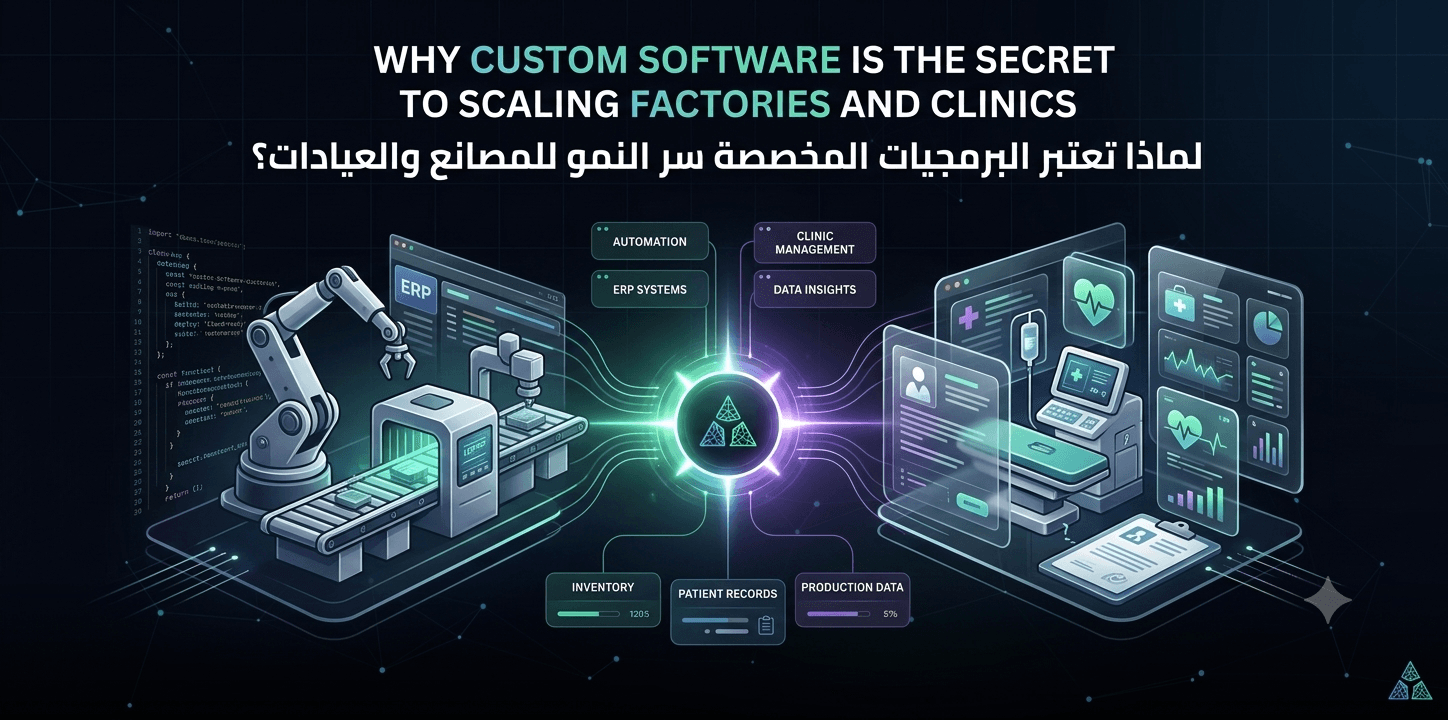
- For Factories: Custom ERP systems streamline inventory management, automate supply chains, and provide real-time data analytics, significantly reducing operational costs.
- For Clinics: Tailored clinic management systems enhance the patient journey, automate bookings, and secure medical records, allowing healthcare professionals to focus entirely on patient care.
The Triadix Approach: Software, Marketing, and Training
True digital transformation goes beyond just writing code. It requires a holistic approach:
- Robust Software Development: Building scalable web and mobile applications that solve real-world problems.
- Data-Driven Digital Marketing: Amplifying your brand presence to ensure your new digital infrastructure reaches the right audience.
- Professional Training: Equipping your team with the skills needed to operate these modern systems efficiently.
Ready to Digitize Your Business?
Investing in custom technology is investing in your business's future. Connect with our expert team today to build a digital ecosystem tailored specifically for your industry.
Separate a reusable platform from industry-specific needs
Factories and clinics may both need approvals, records and reporting, but their workflows, access rules and consequences of error differ. Start with process owners and relevant domain specialists. Do not assume a generic template or an AI feature establishes fitness for a specialised operational or clinical use.
Choose a controlled operational pilot
- Pick one bounded workflow and name its owner.
- Define permitted data and access roles.
- Test normal work and important exceptions.
- Rehearse migration, backup and manual fallback.
- Review results with the responsible specialists.
Use synthetic or appropriately approved data in testing, and confirm applicable requirements with the people responsible for the domain.
Evaluate readiness before scaling
Review whether records reconcile, permissions hold and staff can manage exceptions without losing traceability. Include training and ongoing support in the decision. Describe remaining limitations and plan the next stage around evidence. Custom software can support a well-defined process; it does not automatically repair an unclear one or guarantee business growth.