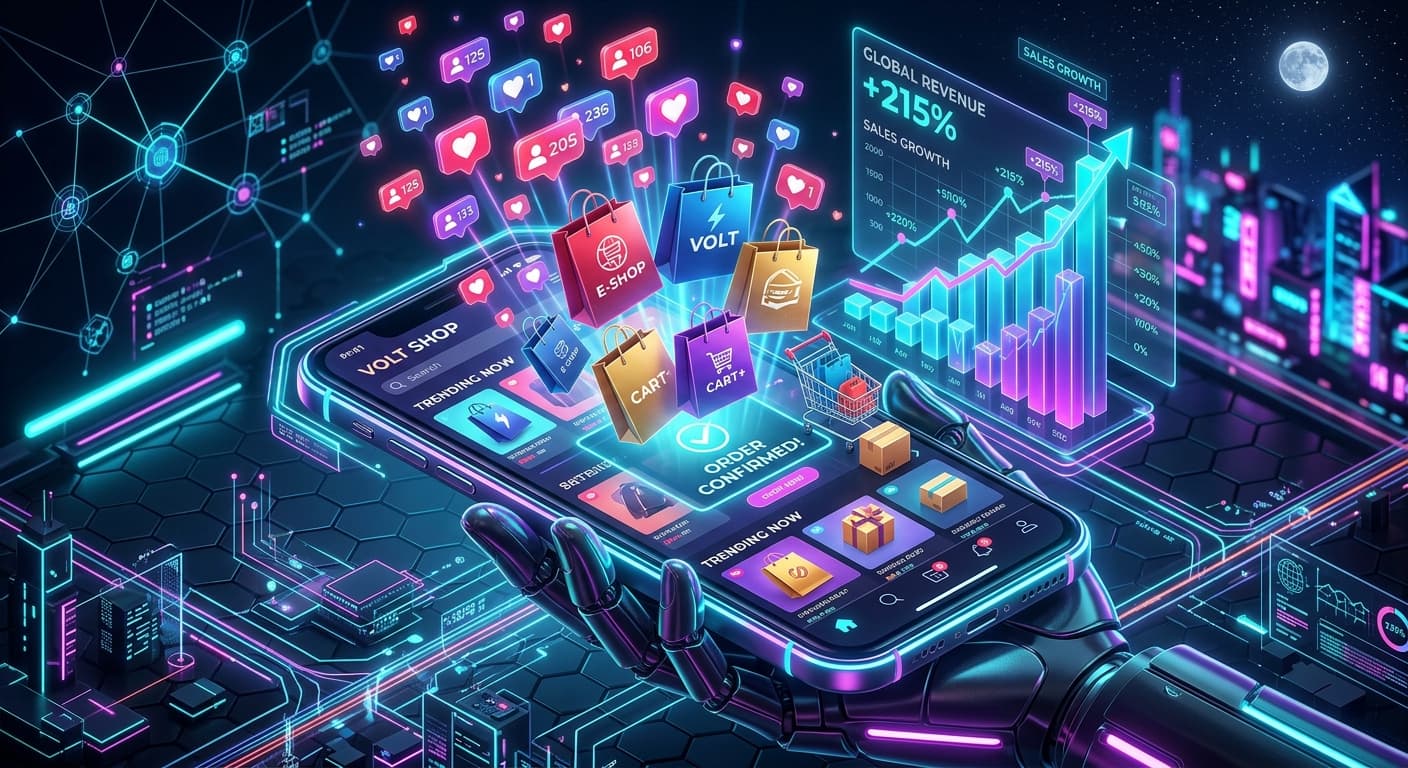
The Shift from E-Commerce to M-Commerce
In the digital age, having a standard e-commerce website is merely the baseline of doing business. The real battleground for customer attention and retention has shifted to Mobile Commerce (M-Commerce). Today's consumers spend an average of 4-5 hours a day on their smartphones, and relying solely on web browsers means competing with countless tabs and distractions. A dedicated mobile application reserves a permanent space for your brand directly in your customer's pocket.
The Limitations of Traditional Websites
While websites are excellent for initial discovery (SEO), they fall short in customer retention. Websites rely on users actively remembering your URL and navigating to it. They also suffer from ad-blockers, slower interaction times, and limited access to native device hardware. A custom application built with modern frameworks (like React Native) eliminates these friction points, providing a fluid, instant, and highly engaging user experience.
Core Features of a High-Converting Retail App
To truly scale your retail business, a mobile app must offer more than just a product catalog. It needs to be an interactive ecosystem:
- Hyper-Personalized Push Notifications: Unlike emails that often end up in spam, push notifications appear directly on the lock screen. Using data analytics, you can send location-based offers or reminders for abandoned carts at the exact moment a user is most likely to buy.
- Interactive Social Commerce (Live & Reels): The modern shopper wants to be entertained. Integrating short-form video content (Reels) or live-streaming directly within your app bridges the gap between social media engagement and instant purchasing, creating a highly addictive shopping loop.
- Integrated Wallet & Loyalty Systems: Reward your best customers effortlessly. Native apps allow for seamless points accumulation, digital wallets, and tiered loyalty programs that incentivize repeat purchases without the need for physical cards.
- Frictionless Checkout & Hardware Access: Utilize the phone's native features. Allow customers to scan QR codes in-store to see reviews, use Augmented Reality (AR) to visualize products, and checkout in one tap using Apple Pay or Google Pay.
The Technical Edge for Retailers
Building a generic app from a template will not yield these results. It requires a robust backend capable of handling high traffic during flash sales, a secure API for payment processing, and a clean, modular codebase for future scalability. Investing in a custom-built digital solution is the most effective strategy to secure long-term market dominance in the retail sector.
Start the retail app with one repeatable benefit
Choose a useful recurring task such as finding available products, reordering or following a delivery. Check whether the customer can already do it satisfactorily through the web. An app needs a reason to be installed and revisited; reproducing a catalogue alone may not establish that reason.
Connect the app to fulfilment before promotion
- Keep product availability and order states consistent.
- Verify payment confirmation on the server.
- Explain delivery coverage and returns.
- Test notifications and customer preferences.
- Give support a complete order history.
Use approved test purchases to check the full journey before inviting customers into a flow that operations cannot fulfil.
Evaluate retention alongside service quality
Review repeat use alongside order completion, failed payments and support reasons. A customer returning to check a delayed order is different from a customer returning because the experience is valuable. Compare meaningful behaviours and ask customers about the context before choosing the next feature or promotional incentive.